

Textual Python
📌 Course Overview
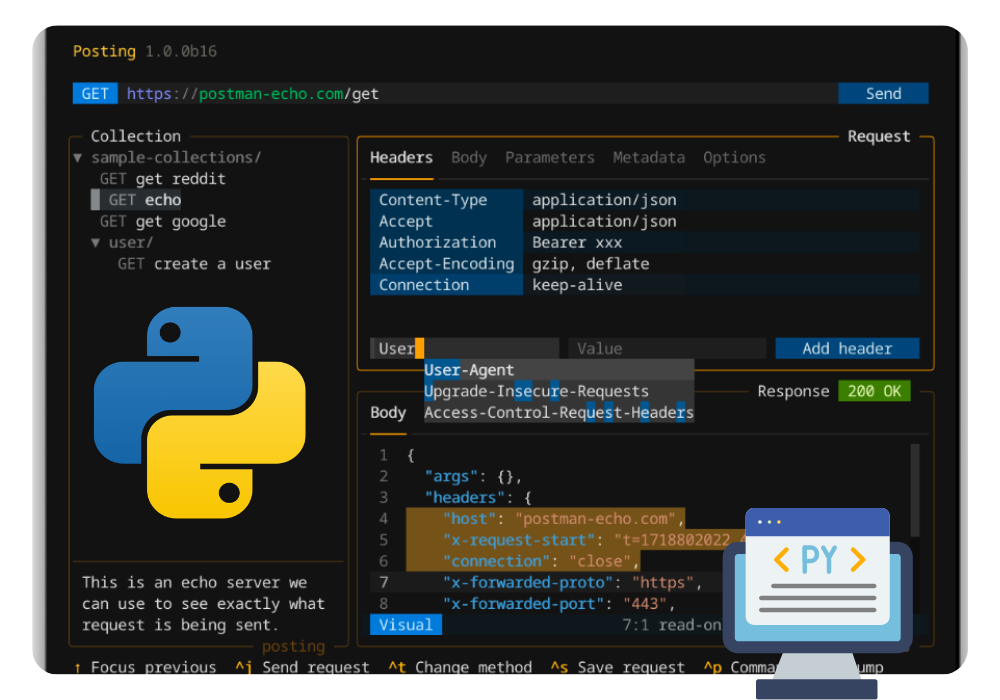
The Textual Python Programming Course is designed for school students (Grades 6–12) who want to move beyond block coding and start writing real code using Python.
Unlike drag-and-drop coding, this course focuses on text-based programming, where students learn how to write actual Python code, understand syntax, and build real-world programs.
Python is one of the most popular programming languages in the world and is widely used in:
- Artificial Intelligence
- Game Development
- Web Development
- Data Science
- Automation
This course builds a strong foundation for advanced coding and future technology careers.
🎯 Course Objectives
By the end of this course, students will be able to:
- ✅ Write Python programs confidently
- ✅ Understand programming logic deeply
- ✅ Use loops, conditions, and functions effectively
- ✅ Work with lists and basic data structures
- ✅ Handle real-world problem solving using code
- ✅ Build mini projects independently
👨🎓 Who Can Join?
- Students from Grade 6 to Grade 12
- Students who completed block coding (optional but helpful)
- Beginners interested in learning real programming
- Students preparing for future tech careers
📚 Course Modules (Detailed Syllabus)
🔹 Module 1: Introduction to Python
- What is Python?
- Installing Python & IDE setup
- Writing your first program
- Understanding syntax
- Print statements & comments
Mini Project: Simple Greeting Program
🔹 Module 2: Variables & Data Types
- What are variables?
- Numbers, strings, booleans
- Taking user input
- Type conversion
- Basic calculations
Mini Project: Basic Calculator Program
🔹 Module 3: Conditional Statements
- If statements
- If-Else logic
- Nested conditions
- Real-life logic building
Mini Project: Age Eligibility Checker
🔹 Module 4: Loops & Iterations
- For loop
- While loop
- Range function
- Loop control statements (break, continue)
Mini Project: Number Guessing Game
🔹 Module 5: Functions & Modular Programming
- What are functions?
- Creating custom functions
- Parameters & return values
- Code reusability
Mini Project: Simple Banking Simulation
🔹 Module 6: Lists & Data Structures
- Introduction to lists
- Indexing & slicing
- List methods
- Introduction to dictionaries
Mini Project: Student Record Management System
🔹 Module 7: File Handling Basics
- Reading from files
- Writing to files
- Saving data permanently
Mini Project: To-Do List Manager
🔹 Module 8: Final Project
Students will design and develop a complete Python-based application such as:
- Quiz Application
- Mini Game
- Expense Tracker
- Contact Management System
🛠 Tools Used in the Course
- Python Programming Language
- Beginner-friendly Code Editor / IDE
- Interactive coding practice platforms
🎓 Certification
Upon successful completion, students will receive:
- ✅ Certificate of Completion
- ✅ Python project portfolio
- ✅ Strong coding foundation
- ✅ Preparation for advanced programming
🚀 Skills Students Will Develop
- Logical thinking
- Analytical reasoning
- Problem solving
- Real programming skills
- Debugging ability
- Confidence in writing code
🕒 Course Duration
- Duration: 3–4 Months
- Classes: 2 Sessions per Week
- Mode: Online / Offline
- Includes assignments and project-based learning